
Semen Test

What a semen analysis measures
Around one in six couples has difficulty conceiving, and a male factor contributes in roughly half of those cases. A semen analysis is how that's established, because nothing about sperm quality is visible or symptomatic — a man with a very low count feels exactly the same as a man with a normal one.
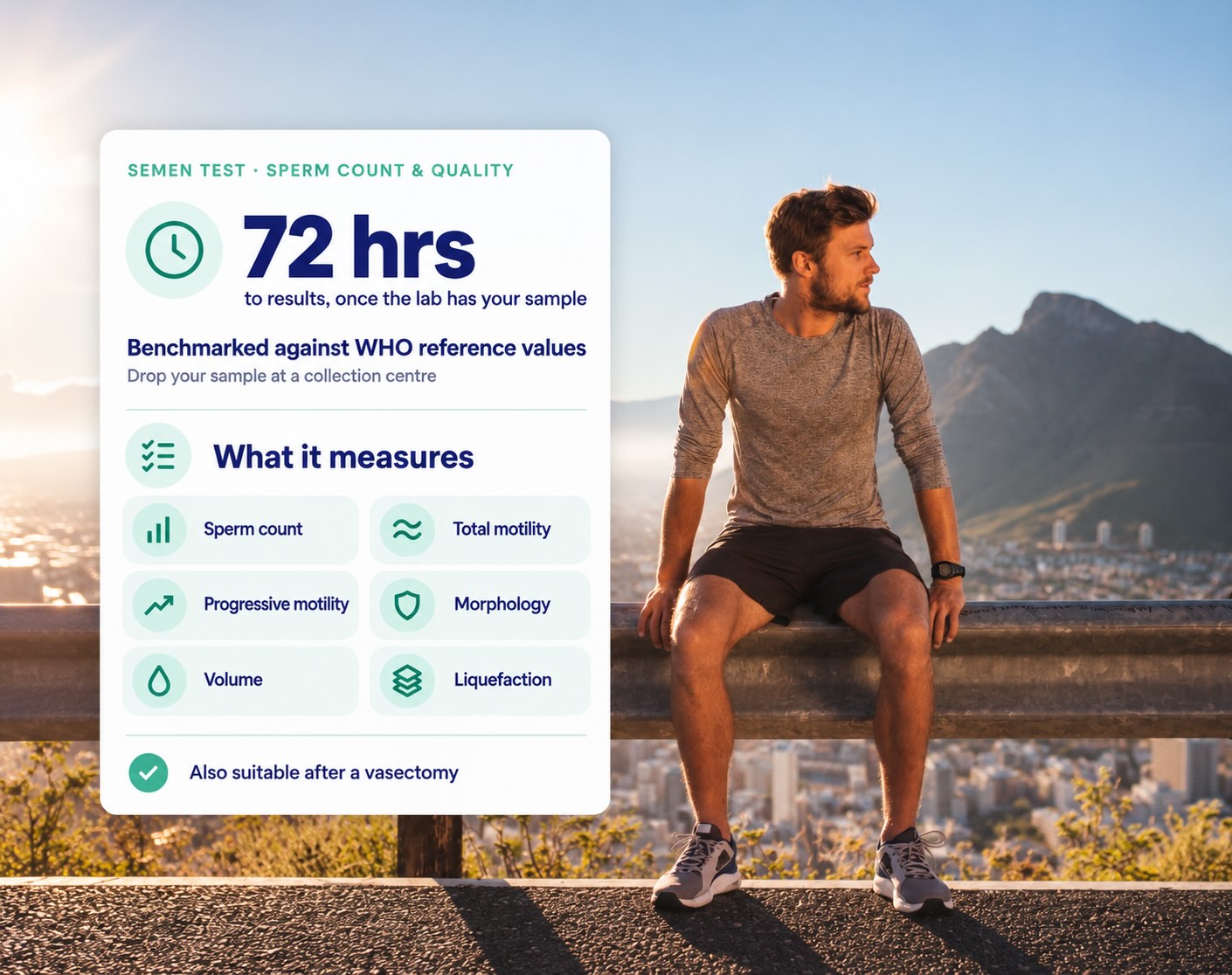
The analysis looks at six things in a single sample. Volume is how much fluid was produced. Concentration is how many sperm per millilitre, and it's the number most people mean by "sperm count". Total motility is the proportion of sperm that are moving at all, and progressive motility the proportion moving forward purposefully, which matters more than movement alone. Morphology is the percentage with a normal head, midpiece and tail. Liquefaction describes how the sample changes from gel to liquid after collection, which should happen within about an hour and can affect how the other results are read. Each is reported against the WHO 6th edition lower reference limit, drawn from men who fathered a child within twelve months.

Who this test is for
Most men order this after six to twelve months of trying to conceive, or to get a baseline before starting. It's worth doing sooner if you've had testicular surgery or injury, an undescended testicle, chemotherapy or radiotherapy, or a swelling in the scrotum that could be a varicocele — dilated veins, a common and often treatable cause of reduced sperm quality.
The same test confirms a vasectomy. Your surgeon will usually ask for a sample at least eight to twelve weeks afterwards and after twenty or more ejaculations, since sperm beyond the cut take time to clear. The vasectomy isn't confirmed until a sample shows no sperm, so keep using contraception until you have that result.
To check for infection rather than sperm quality, see our Semen Microbial Analysis. To avoid a collection centre entirely, the Semen Test – Home Kit collects and analyses at home.
What's included
You'll receive a clear digital report within 72 hours of the lab receiving your sample. It sets out each marker with your result alongside the WHO reference value, a plain-English summary of what's in range and what isn't, and your next steps — including when to retest, and when to see your GP or a fertility specialist. One result below a reference value doesn't mean you're infertile: sperm quality naturally varies from sample to sample, so a low result is usually confirmed with a repeat test.
Test instructions

Pick up a sample collection container from your local collection centre.

Abstain from ejaculation for 3 to 7 days before collection.

Follow the ‘seminal fluid collection’ instructions provided. Please note only certain collection centres can accept semen samples.
Ready. Set. Go!
Buy now for $75

Common Questions
You may also be interested in
Semen Test - Home Kit
A semen analysis home test kit measuring key fertility markers including count, motility and morphology.
Semen Microbial Analysis
Semen microbial analysis is used to identify the presence of microorganisms in a semen sample. This test can help diagnose infections, sexually transmitted diseases, and other conditions that may affect male fertility and reproductive health.
Antisperm Antibodies Test
A blood test measuring antibodies that bind to sperm and may affect fertility. Suitable for both men and women. Discuss results with your GP.